
Protect Queer Art: Micah Rustichelli’s ‘Demon Rhythm’ battles the AI Demon
Submitted and written by Jordyn Yeung
Jordyn Yeung is an emerging arts writer and worker based on the lands of the Yuggera and Turrbal people. She is passionate about producing interdisciplinary writings on art and culture.
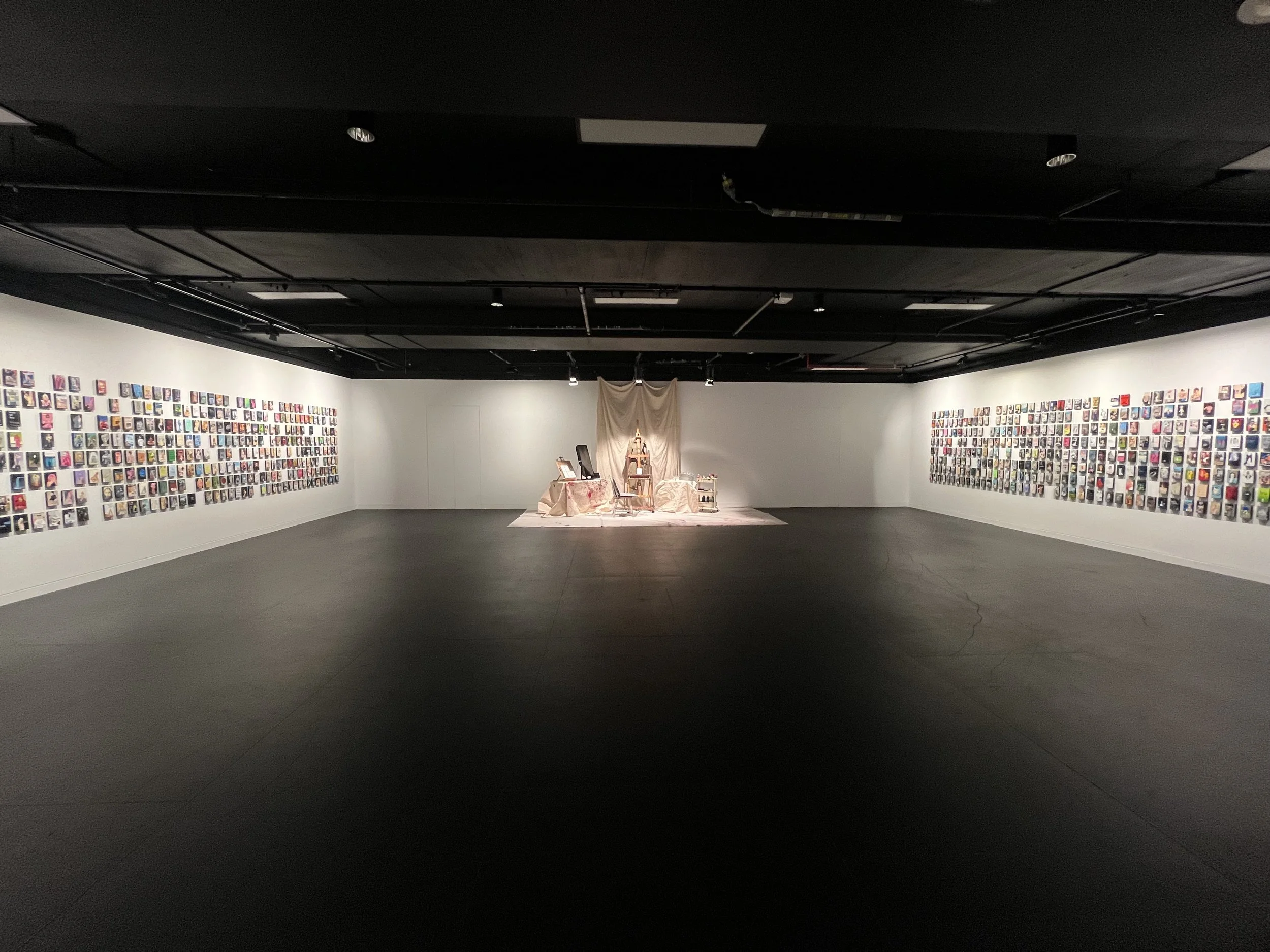
Upon walking into the gallery, I felt nothing but overwhelmment. Imagine walking into a room with nothing but a thousand paintings and a throne for the artist who created every single one of them, because that’s what Demon Rhythm is.
Created in response to his art getting stolen and used to train an AI model, Micah Rustichelli has been replicating more than a thousand images from Instagram. The tedious process of hand-painting individual 10x15 images does not only playfully critique the immediacy of AI image generation but also challenges the value of art and image ownership.
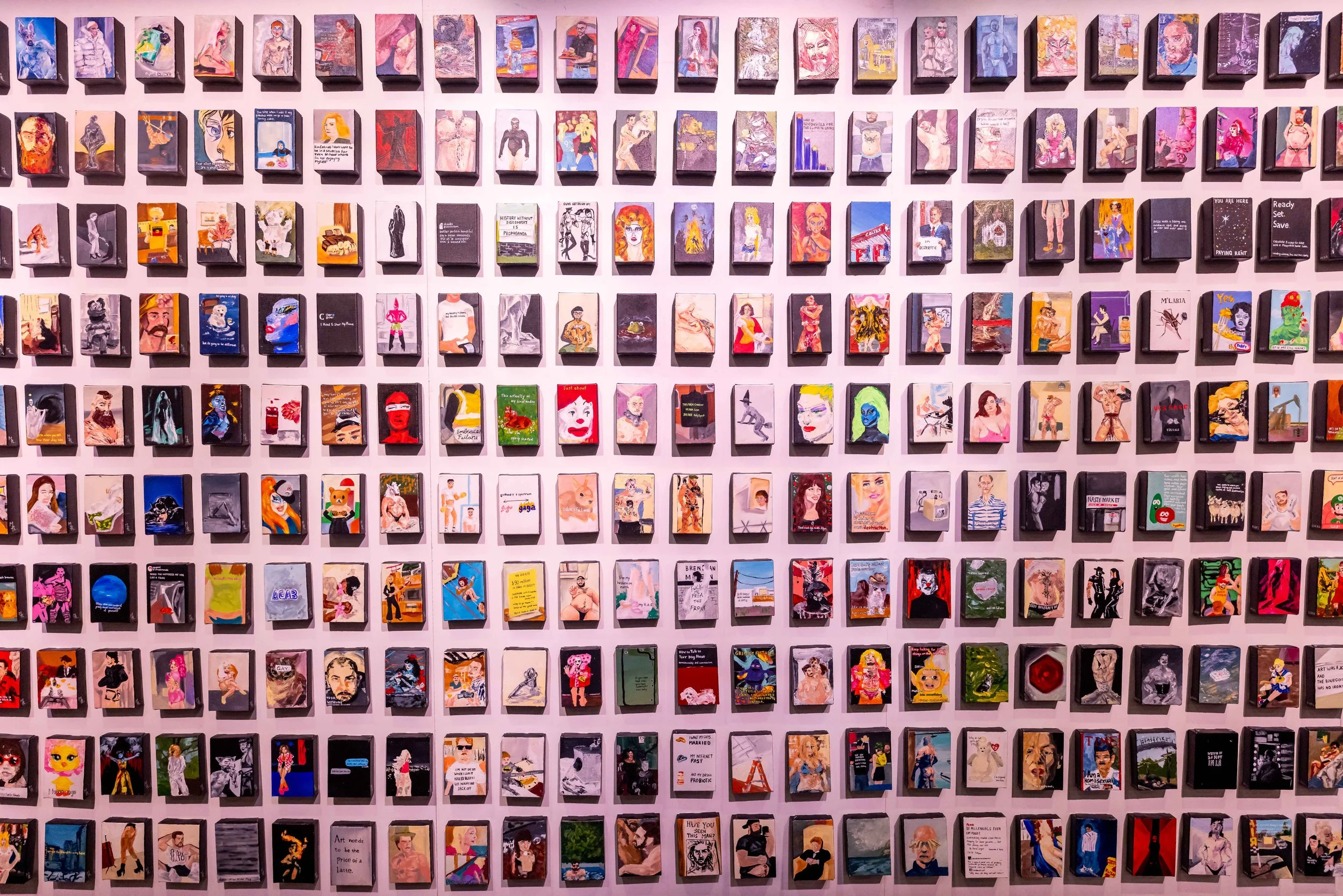
Image courtesy of Micah Rustichelli
To me, walking through the Powerhouse’s Fairfax Gallery was like reading a chronology of Queer culture from 2022 to today, with countless references to point to, reminisce on, and giggle at. From Brat Summer, to niche references, to capitalism hell-scapes, Micah has captured it all.
Perhaps the most overwhelming thing in encountering this exhibition was how Micah managed to displayed everything that resonated with me and the wider Queer community from the past three years. When asked about his process in picking images, he stated that it has been a very intentional and conscious process of cherry-picking screenshots taken from his Instagram feed.
However, what started as a very silly and light-hearted project has “gotten a lot more serious and absurd in its politics/memes,” and he hopes that his project accidentally captures the radical and divisive direction that he feels Instagram algorithms have been leaning towards in recent years.
Micah’s intentional practice has captured not merely screenshots, but algorithmic influences on humanity, and most importantly, lived human experiences — something AI could never replicate in a million years.
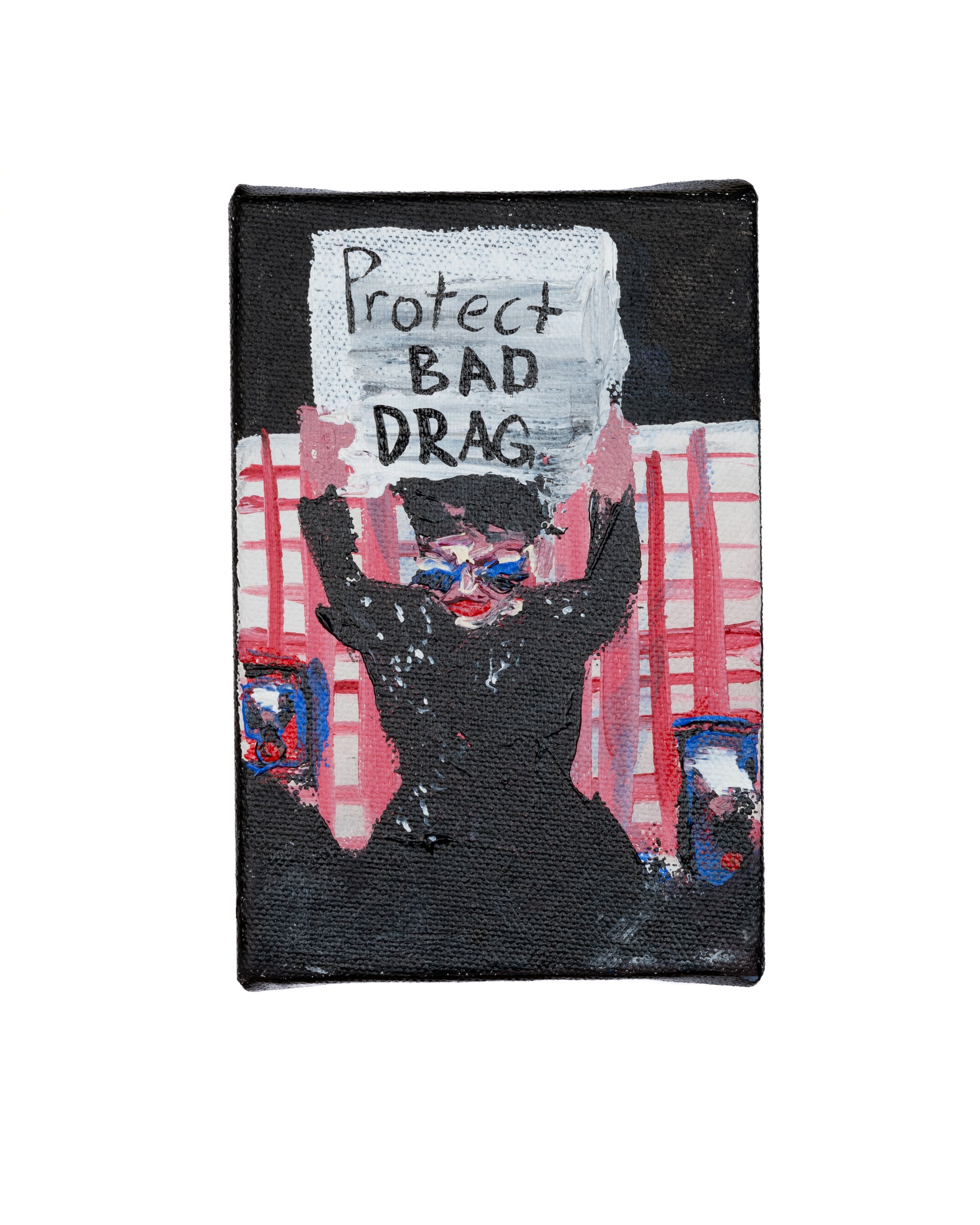
Image courtesy of Micah Rustichelli
Although AI models have been trained (non-consensually) on Micah’s and countless other Queer artists’ work, many generative models flag Queer topics as offensive and refuse to respond when Queer identity terms are mentioned.
In fact, the impossible-to-get-rid-of automatic AI answer machine on Google did not appear for once when I searched “Can AI generate queer images” — a simple question, really.
However, on instances where prompts do go through, AI models generate Queer caricatures based on homophobic content and pornography websites. Additionally, these caricatures of Queer people are reported to be overwhelmingly white and does not represent the real diversity within the Queer community.
In this light, Demon Rhythm is an exhibition beyond a reaction against AI, it is protecting Queer art and the Queer community by depicting that Queerness is more than a number to be rejected by language models.
By being an actual Queer person making actual Queer art, Micah represents the emotional depth of creative processes, social dynamics surrounding Queer representations, and the value of nuanced lived experiences. Demon Rhythm tells us that the fluid and contextually dependent concept of being Queer can only ever—and should only ever—be depicted by humans.